Dr. Robert J. Zapf, M.S., D.C.
Chiropractic Physician
Summa Cum Lauda Graduate & former Associate Professor of Diagnosis
Palmer College of Chiropractic
Knee Pain & Arthritis: Could a Drug-Free, Non-Surgical Treatment Help You?
If your knees ache when you climb stairs, get out of a chair, or walk through a parking lot, you are far from alone. Knee pain — especially from osteoarthritis — is one of the most common reasons people visit a doctor, and too often the conversation goes straight to injections or surgery. But there is a conservative, hands-on path worth knowing about first.
What Is Knee Osteoarthritis — and Why Does It Hurt So Much?
Osteoarthritis (OA) is the most common form of arthritis. The word itself means "joint inflammation with degeneration," but the plain-language version is this: the smooth, slippery cartilage that normally cushions the ends of your knee bones gradually wears down. When that protective layer thins, the bones begin to rub against each other, causing pain, stiffness, and swelling.
The knee is especially vulnerable because it bears your full body weight with every step. Over time, the cartilage cannot keep up with the daily wear, the joint space narrows, and the tissues around it become irritated and inflamed.
Research published in Annals of Internal Medicine found that the prevalence of knee pain has increased significantly over a 20-year period, independent of age or body weight, and affects approximately 30 to 40 percent of adults by age 65[1]. That is tens of millions of people — and the numbers keep climbing.

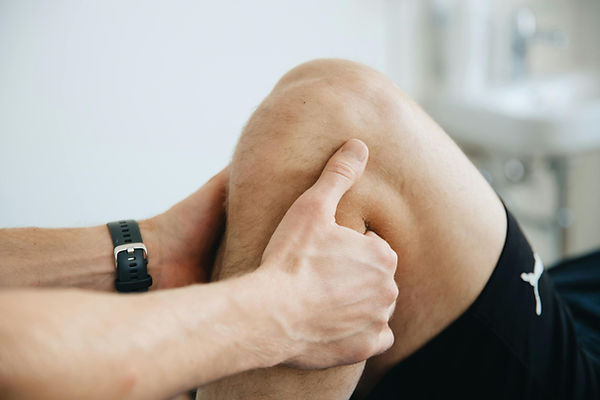
What Does It Feel Like? Common Signs and Symptoms
Knee OA does not always announce itself with sudden, dramatic pain. It often sneaks up gradually. Common symptoms include:
• Dull, aching pain in or around the knee joint — often worse after activity
• Morning stiffness that loosens up after 20 to 30 minutes of movement
• A grinding, creaking, or clicking sensation when bending or straightening the knee
• Swelling or a feeling of warmth around the joint
• Reduced range of motion — difficulty fully bending or straightening the leg
• Pain that worsens when going up or down stairs, rising from a chair, or after prolonged sitting
• Weakness or a feeling that the knee might "give out"
Symptoms can vary widely. Some people have moderate cartilage loss on imaging but feel minimal pain; others have significant daily discomfort with relatively mild imaging findings. How the knee feels to you is every bit as important as what an X-ray shows.
How Is Knee OA Diagnosed?
A typical evaluation includes:
• Health history: When did the pain start? What makes it better or worse? Prior injuries or surgeries?
• Physical examination: Range of motion testing, joint palpation, orthopedic and neurological tests to assess joint stability, swelling, and movement quality
• X-rays: Weight-bearing X-rays are the standard imaging tool for OA. They show joint space narrowing, bone spurs (osteophytes), and changes in bone shape. X-rays are taken while you stand to reflect real-world loading.
• MRI: Not always necessary, but may be ordered if soft tissue damage (meniscus, ligaments, cartilage) is suspected beyond what X-rays reveal
An examination gives me far more useful clinical information than imaging alone. Many people have X-rays showing significant OA changes but function quite well — and vice versa. Treatment decisions are based on the full clinical picture, not just the images.
A Non-Surgical Option Worth Knowing About: Knee Flexion Distraction Decompression
One of the more promising conservative treatments for knee pain and OA is a technique called Cox Flexion Distraction Decompression (FDD) — a gentle, hands-on, non-invasive chiropractc procedure that applies controlled traction to the knee joint.
You may already know Cox Flexion Distraction as a well-researched treatment for back and neck pain. Federally funded research has documented that this technique reduces pressure inside spinal discs, increases disc height, and widens the openings through which spinal nerves travel[2]. The same decompression principle has now been applied to the knee — and the early results are encouraging.

A Non-Surgical Option Worth Knowing About: Knee Flexion Distraction Decompression
A 2017 study published in the Journal of the Canadian Chiropractic Association examined 25 patients who received Cox FDD applied to the knee[2]. Patients ranged in age from 20 to 80 years, and included both short-term (acute) and long-standing (chronic) cases. Fourteen of the 25 patients had already undergone previous knee surgery, including knee replacements that had not fully resolved their pain[2].
Patients rated their pain levels using the Visual Analogue Scale. Pain is measured on a range from 0=No pain to 10=Severe pain.
-
For all 25 patients, the mean VAS scores dropped from 7.7 to 1.8.
-
The mean number of treatments was 5.3 over an average of 3.0 weeks.
-
Acute patient mean VAS scores dropped from 8.1 to 1.1 within 4.8 treatments over 2.4 weeks.
-
Chronic patient mean VAS scores dropped from 7.5 to 2.2 within 5.4 treatments over 3.3 weeks.
Most patients reported feeling some relief after their very first treatment — with improvement lasting from several hours to two days[2]. At follow-up (one to three months later), almost all patients reported better mobility, strength, and knee stability. No adverse events were reported in any patient[2].
How Does It Work?
Think of it this way: a joint under constant compression — from body weight, muscle tightness, and accumulated wear — has difficulty circulating the nutrients its cartilage needs to stay healthy. Decompression gently "unloads" that joint.
Research suggests that cartilage has an intrinsic ability to repair itself when the joint is exposed to distraction (gentle pulling apart) combined with controlled mechanical movement[2][3]. A separate line of research showed that six weeks of continuous knee joint distraction was capable of actually regenerating articular cartilage — in some cases doubling its thickness — with results maintained at five-year follow-up[2]. More recent studies have shown that these cartilage regeneration benefits can persist for up to 10 years after knee joint distraction treatment[4].
The biological mechanism involves a process called mechanotransduction — essentially, the way your body's cells respond to physical forces[2]. When the knee joint is gently loaded and unloaded in a rhythmic, controlled way, it stimulates the cartilage-producing cells (chondrocytes) to increase production of the protective compounds that keep cartilage hydrated and resilient[2]. Stretching connective tissue has also been shown to reduce inflammation and increase natural inflammation-resolving compounds in the body[2].
In plain terms: the treatment talks to your joint at a cellular level, encouraging it toward healing rather than further breakdown.
How This Fits Into the Care I Provide
Conservative care for knee OA is most effective when it is multimodal — meaning more than one treatment approach working together[5]. In my practice, care is organized in three tiers that progress as you improve:
Tier 1 — Education and Supportive Care
We start by understanding your condition, reducing aggravating activities, and beginning to move in ways that support healing. Education about what is happening in your knee — and what to realistically expect — is a foundational part of this stage.
Tier 2 — Hands-On Conservative Treatment
This is where active care begins. Depending on your examination findings, this may include:
• Cox Flexion Distraction Decompression to the knee
• Soft tissue therapy and trigger point treatment
• Physical therapy modalities: interferential muscle stimulation, therapeutic ultrasound, shortwave diathermy, and massage — all directed at reducing pain, decreasing muscle guarding, and improving circulation to the joint
Tier 3 — Therapeutic Exercise and Functional Rehab
The goal of this stage is lasting improvement: rebuilding the strength, stability, and movement control that protect the knee long-term. Research consistently supports the combination of manual therapy with exercise as producing better outcomes than either approach alone — a finding confirmed in two separate randomized controlled trials published in Annals of Internal Medicine and Physical Therapy[2].
Your specific care plan is based on your examination findings, how you respond to treatment, and your personal goals

Frequently Asked Questions
Is this a first-line treatment, or should I try other things first?
Conservative care — including manual therapy, decompression, and therapeutic exercise — is widely recognized as a first-line approach for knee OA. "First-line" is a medical term meaning: try this before moving to injections or surgery, because it carries lower risk, lower cost, and comparable or better outcomes for many patients. This is the position of major medical and orthopedic guidelines worldwide.
I have already had knee surgery. Can I still be treated?
Possibly, yes. In the study discussed above, 14 of the 25 patients had prior knee surgery — including two who had total knee replacements but still had ongoing pain[2]. Both surgical patients were in the chronic group and still showed meaningful improvement. Every situation is different, and a thorough evaluation is necessary to determine what is appropriate.
How many treatments will I need?
In the research reviewed here, the average was approximately five treatments over three weeks[2]. However, individual results vary based on how long the problem has been present, your overall health, your activity level, and how well you respond. Chronic conditions often require more sustained care.
Is the treatment painful?
Cox Flexion Distraction is designed to be gentle. The force is applied according to your individual tolerance, and the treatment is delivered in a smooth, rhythmic motion. It is not a forceful cracking or popping maneuver. Most patients find it comfortable.
What about exercise? I am afraid of making it worse.
Research specifically shows that increasing physical activity in people with OA reduces both pain and depression[6]. Avoiding movement can actually accelerate joint degeneration. The key is the right type of exercise, at the right intensity, introduced gradually — which is exactly what Tier 3 care is designed to do.
Can diet help?
Nutrition can play a supportive role. An anti-inflammatory diet — reducing processed foods and increasing omega-3 fatty acids — may help support the body's natural inflammation-resolving processes, which are directly relevant to cartilage health[2]. We discuss nutritional support as part of a comprehensive care plan.
What About Medications, Injections, and Surgery?
It is a fair question, and you deserve a balanced, honest answer — not a sales pitch for any one approach.
Medications (NSAIDs): Over-the-counter anti-inflammatories like ibuprofen and naproxen are commonly used for knee OA pain. They can provide short-term relief, but they work by blocking the inflammation process rather than resolving it — and long-term use carries real risks, including gastrointestinal bleeding, cardiovascular effects, and kidney strain. They do not slow the progression of OA.
Cortisone injections: These can offer meaningful short-term pain relief for some patients. However, evidence suggests that repeated corticosteroid injections may accelerate cartilage loss over time. They are generally considered a temporizing measure, not a long-term solution.
Total Knee Replacement (TKR): For severe, end-stage OA that has failed all conservative measures, knee replacement can be a legitimate and life-improving option. However, utilization rates in the United States more than doubled between 1999 and 2008 — a rise that researchers noted cannot be fully explained by population growth or obesity alone[7]. Many patients who undergo TKR do so before exhausting conservative options. It is also worth noting that some patients continue to have pain even after successful surgery — two such patients were included in the study discussed in this article and still responded to conservative care[2].
The goal of conservative treatment is not to deny you effective care — it is to make sure you have given your body its best chance at non-surgical recovery before accepting the risks and recovery demands of more invasive options.
References
[1] Nguyen, U. S., Zhang, Y., Zhu, Y., Niu, J., Zhang, B., & Felson, D. T. (2011). Increasing prevalence of knee pain and symptomatic knee osteoarthritis. Annals of Internal Medicine, 155(11), 725–732.
[2] Albano, L. (2017). Innovative application of Cox Flexion Distraction Decompression to the knee: a retrospective case series. Journal of the Canadian Chiropractic Association, 61(2), 153–161. https://pmc.ncbi.nlm.nih.gov/articles/PMC5596966/
[3] Lafeber, F., Intema, F., van Roermund, P., & Marijnissen, A. (2006). Unloading joints to treat osteoarthritis, including joint distraction. Current Opinion in Rheumatology, 18, 519–525.
[4] Van der Woude, J. T., van Roermund, P. M., Intema, F., Custers, R. J., Eckstein, F., Mastbergen, S. C., & Lafeber, F. P. (2021). Knee joint distraction results in MRI cartilage thickness increase up to 10 years after treatment. Rheumatology, 60(8), 3740–3749. https://pmc.ncbi.nlm.nih.gov/articles/PMC8889280/
[5] Law, A. (2001). Diversified chiropractic management in the treatment of osteoarthritis of the knee: a case report. Journal of the Canadian Chiropractic Association, 45(4), 232–240.
[6] Penninx, B. W., Rejeski, W. J., Pandya, J., Miller, M. E., Di Bari, M., Applegate, W. B., & Pahor, M. (2002). Exercise and depressive symptoms: a comparison of aerobic and resistance exercise effects on emotional and physical function in older persons with high and low depressive symptomatology. Journal of Gerontology: Psychological Sciences, 57(2), P124–P132.
[7] Losina, E., Thornhill, T. S., Rome, B. N., Wright, J., & Katz, J. N. (2012). The dramatic increase in total knee replacement utilization rates in the United States cannot be fully explained by growth in population size and the obesity epidemic. Journal of Bone and Joint Surgery, 94(3), 201–207.